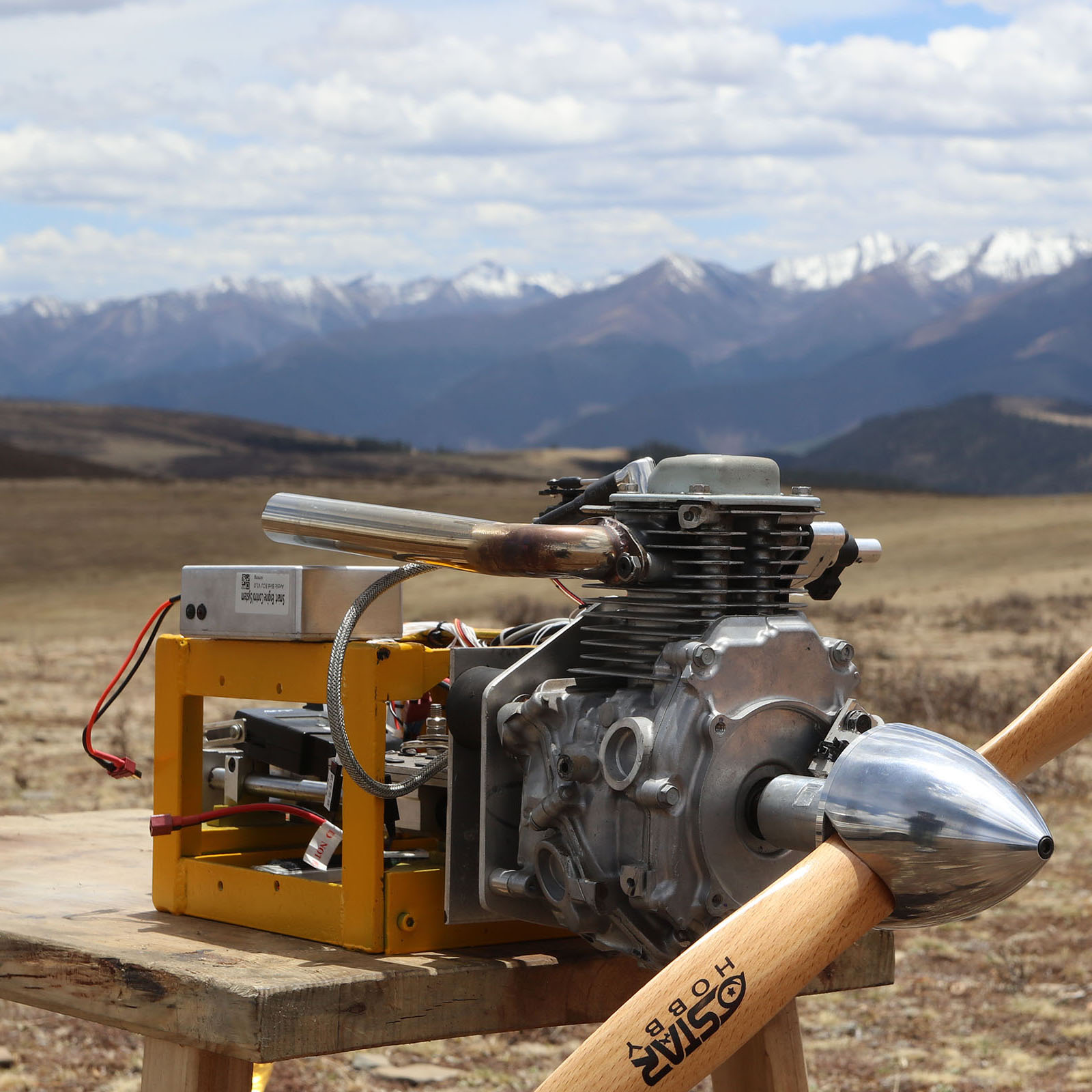
Fuel concept: aviation gasoline first, EFI as an option
The baseline for DE ENGINE products is conventional aviation gasoline (or high-quality automotive gasoline where appropriate) mixed with 2-stroke synthetic oil.
- Reliable starting behavior in a wide range of climates.
- Predictable fuel consumption for long-range flight planning.
- Worldwide availability and straightforward logistics.
For selected engines and projects, DE ENGINE also provides EFI solutions and on-board generator packages, especially for large UAVs with demanding mission profiles.
Mechanical design and vibration control
UAV avionics and payloads are highly sensitive to vibration. DE ENGINE therefore places strong emphasis on engine balance and mounting:
- Opposed twin-cylinder layouts on DE120 and DE170 to reduce primary forces.
- Four-cylinder configurations on DE550 and DE730 for smooth torque delivery.
- Three-bearing crankshafts and CNC-machined components for strength and precision.
- Recommended engine mount and isolation strategies to protect structures.
Cooling, lubrication and durability
All DE ENGINE gasoline models use proven air-cooled cylinder and head fin systems combined with two-stroke mixture lubrication.
- Optimized fin geometry for stable head temperatures.
- Mixture lubrication with specified gasoline-to-oil ratios.
- Conservative temperature margins to support long service life.
EFI and power generation options
Some programs require full authority electronic fuel injection and substantial electrical power for avionics, data links and mission payloads. For such projects, DE ENGINE can deliver:
- EFI systems tailored to specific engines and missions.
- On-board generator packages integrated with the engine.
- Interface support for common autopilot and power systems.
Integration support and documentation
Successful UAV propulsion is about more than the engine itself. DE ENGINE supports integrators with:
- Installation guidelines including mount, exhaust and cooling airflow.
- Recommended fuel system layouts and filtration.
- Ignition wiring and EMI mitigation recommendations.
- Maintenance schedules and spare parts planning.